2026

Documentation
Autonomous Control - Getting Started
Autonomous Starter Guide
This page is designed for FTC teams that are starting autonomous implementation. Follow these steps in order to build a stable baseline before advanced optimization.
Quick Intro
Odometry Pods Before Routes
Localization quality decides whether your autonomous will feel "random" or repeatable. Most teams choose one of these layouts:
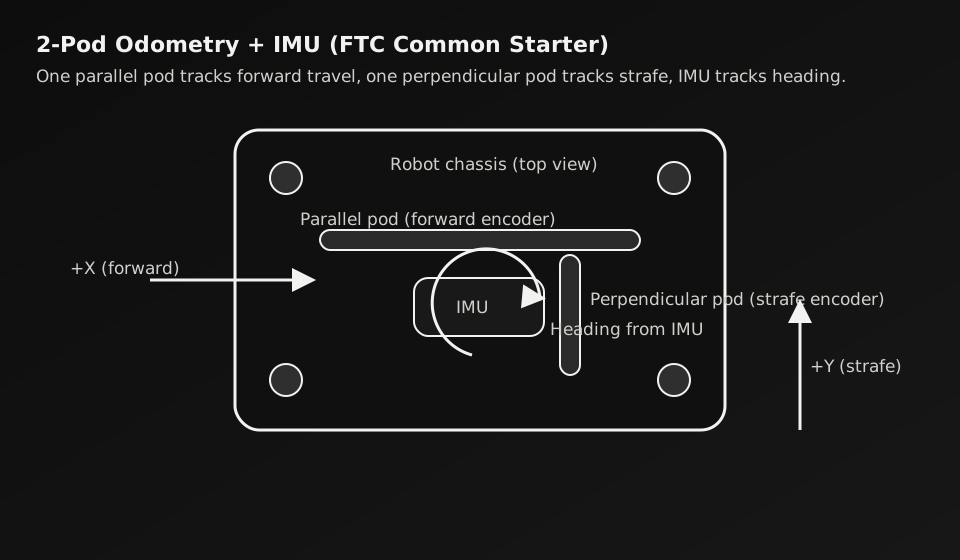
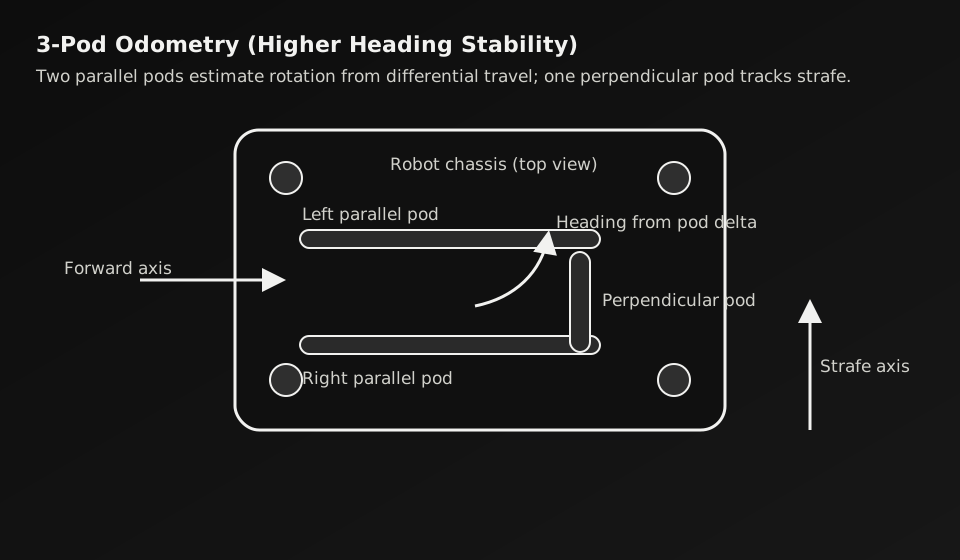
If your team is beginner-level, start with 2-pod + IMU and move to 3-pod only if needed.
Step 1
Prepare the Baseline Autonomous Class
drive/Autonomous/AutonomousControl.java (regional code).Step 2
Implement Case Selection and Start Poses
Use a controlled init loop and switch statement to choose route/case:
while(opModeInInit()) {
    if (gamepad1.dpad_left) { /* toggle alliance */ }
    if (gamepad1.dpad_up)   { /* toggle side */ }
}

switch(autoCase){
    case 0: drive.setPoseEstimate(startPose_RedAudience);
            drive.followTrajectorySequenceAsync(trajectoryRedAudience); break;
    case 1: drive.setPoseEstimate(startPose_BlueAudience);
            drive.followTrajectorySequenceAsync(trajectoryBlueAudience); break;
}
Step 3
Attach Mechanism Actions With Temporal Markers
Step 4
Add AprilTag Pattern Support (Optional Early)
Step 5
Run Validation in Three Layers
Common Fails
Next
Open Odometry Pods for the detailed calibration workflow and 2-pod vs 3-pod tradeoffs.
Setup
AprilTag Detection
Autonomous Control
Getting Started
Auto Aiming Turret